
An Owl and Three Sisters
- revgregorynbaker
- Apr 22
- 3 min read
Scripture: Psalm 104:24 – “O Lord, how manifold are your works! In wisdom you have made them all; the earth is full of your creatures.” (NRSVUE)
Why did God create the world in all its rich diversity? Was it all for our benefit as creatures made in God’s image and granted dominion over all plants and animals (Genesis 1:28)? Or does the world have a divine dignity all its own, created to be “very good” by God every step of the way (Genesis 1:31)? Or are things more complicated and interdependent that facile interpretations of these verses might indicate?
I want to tell two ecological stories and how they represent how to cultivate a holy approach to the world that sacrifices the flourishing of neither humans nor other creatures.
The first is the story of the Three Sisters. In indigenous American agriculture, corn, beans, and squash (The Three Sisters) are allowed to grow together. This relationship has benefits. Corn grows tall, allowing bean vines to climb off the ground. This allows the squash to grow along the earth. Its deep roots protect the soil from weeds and allow the corn with its shallow corn to thrive. And beans transform the soil by unlocking nitrogen. A self-sustaining structure that impacts plants, insects, and soil. It also benefits human diets, with corn for carbohydrates, beans for protein, and squash for vitamins. A three-in-one system. I am sure there is an example for the Trinity in there somewhere.
To remove one sister from the others requires a lot of effort. Americans love corn, but without the other sisters, it requires a lot of water, nutrients, and pesticides to keep corn healthy for us enjoy. Lacking diversity can create systems that are expensive and fragile.
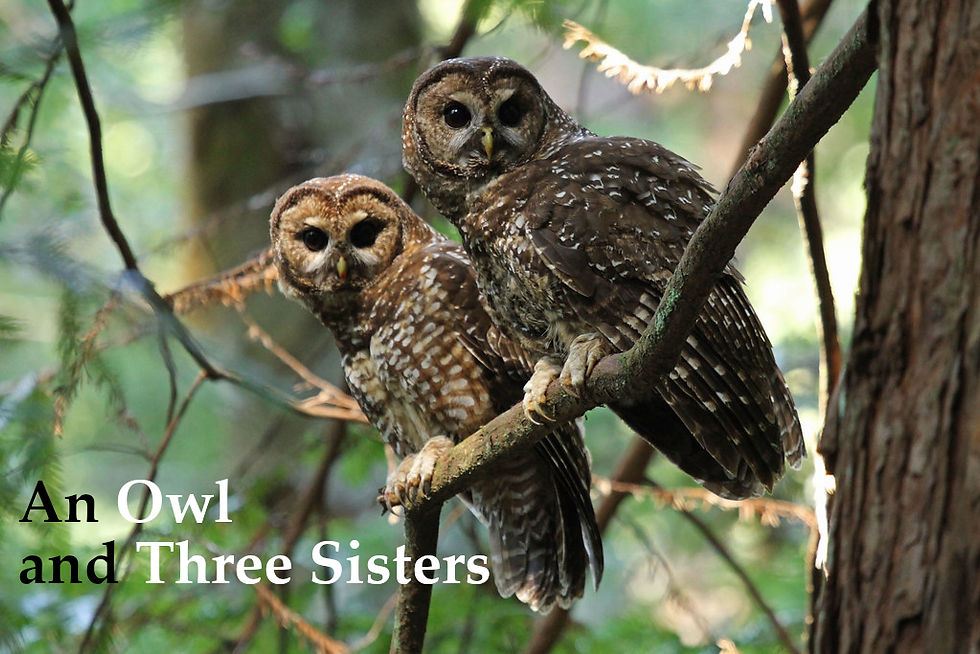
The second story is about the spotted owl. In 1980s, as logging in the Pacific Northwest entered old growth forests, the northern spotted owl was threatened with extinction. However, curtailing logging in those forests to protect the owl would cost jobs in an economically vulnerable region. Some experts warned that hundreds of thousands of jobs to be lost. Ultimately, a compromise was reached wherein the forests were preserved. The biosystem with its rich diversity was allowed to survive.
At first, there were losses in jobs, though far fewer than was feared. Now about thirty years later, many of the counties that depended on logging have stabilized their economies by diversifying their land use and labor force. Jobs in preservation partially offset those lost from logging. Those old growth forests attract tourists, which bring other businesses. And a diverse economy can support itself in ways that an economy based on only one profitable product cannot. And were logging to continue unabated for thirty years, the forests would have been cleared, and the loggers would have lost their jobs anyway.
On this Earth Day, as we are reminded of the importance of celebrating and conserving the world around us, it is important to remember where God fits into the story. The doctrine of the Trinity reminds us that mutuality and interdependence are a divine truth that is reflected in the world around us. The doctrine of God the creator teaches us that all the things around us are created good, even the ones that seem less profitable than others. And through our faith, we find that by maintaining a balance between our needs and those of our neighbors can bring mutual flourishing for all.
As environmental concerns are forgotten amid all the headlines of war and division, take time today to pray for the gift of diversity, which not only reflects the fullness of God, but can bring joy and thriving to all.
Prayer: God of all creation, help me to look upon your creation to see your glory and your love for all that breathes and grows. Amen.
References:
Kimmerer, Robin Wall. Braiding Sweetgrass: Indigenous Wisdom, Scientific Knowledge and the Teachings of Plants. Milkweed Editions, 2015.
Rasker, Ray. “Lessons from the Timber Transition.” Headwater Economics, accessed April 22, 2026, https://headwaterseconomics.org/economic-development/trends-performance/timber-transition.
Image credit: Jared Hughey.


Comments